
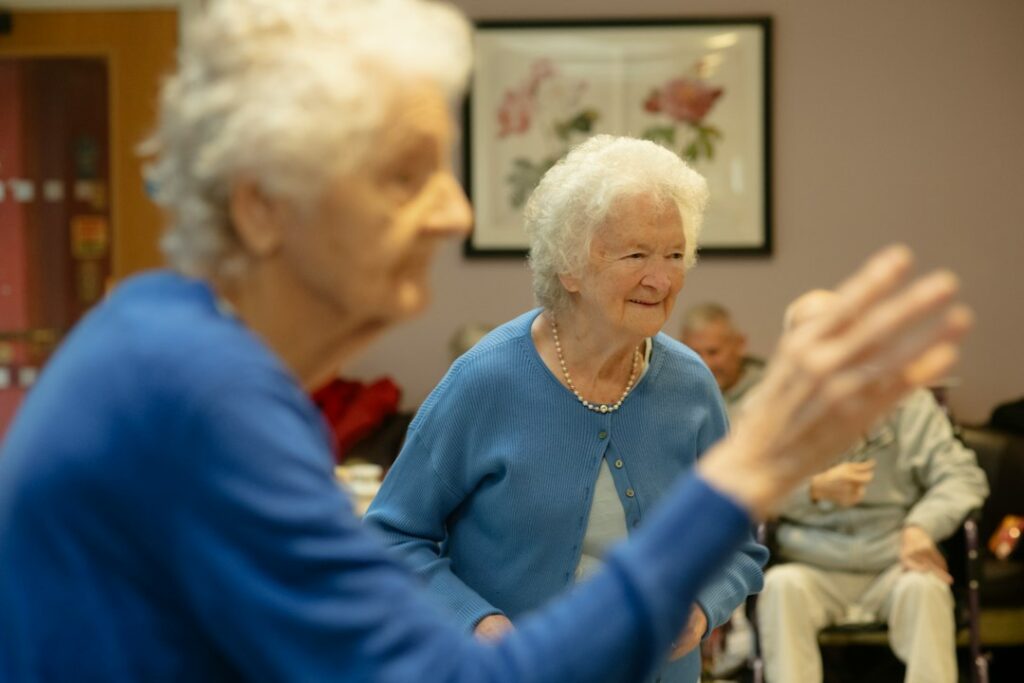
What kinds of activities are offered in assisted living?
Assisted living activities usually include a mix of social, physical, creative, educational, spiritual, and everyday-life experiences. The goal is not to keep residents busy every minute, but to provide meaningful choices that support independence, connection, movement, and enjoyment.
Common activities may include:
- Group exercise, stretching, walking, or balance classes
- Music programs, sing-alongs, dancing, and live performances
- Art, crafts, gardening, baking, and seasonal projects
- Card games, puzzles, trivia, and board games
- Book discussions, current-events conversations, or educational talks
- Religious or spiritual gatherings based on resident preferences
- Movie afternoons and other shared entertainment
- Reminiscence programs using photographs, music, recipes, or familiar objects
- Small-group outings and errands
- One-to-one visits for residents who prefer quieter interaction
Programs differ from one community to another, and schedules may change based on staffing, weather, resident interest, and safety considerations.
How do activities support health and well-being?
Recreation can support several areas of daily life at the same time. Physical activities may help residents maintain strength, flexibility, balance, and confidence with movement. Even gentle exercise, such as seated stretching or a short hallway walk, can be useful when matched to a person’s abilities.
Social activities can reduce isolation by creating regular opportunities to see familiar faces. A resident does not have to participate in large groups to benefit. A small card game, shared meal conversation, or scheduled visit may provide meaningful contact.
Creative and cognitive activities also serve different purposes. Painting, music, storytelling, and crafts encourage self-expression. Puzzles, trivia, reading, and discussion groups offer mental stimulation without making recreation feel like a test.
Activities may also give structure to the day. Knowing that music is scheduled after breakfast or that a favorite game occurs each week can make daily routines easier to follow.
Are residents expected to participate in every activity?
No. Residents should be able to choose whether, when, and how they participate. A person may enjoy watching a program without joining the activity, attending only part of an event, or choosing individual recreation instead of a group gathering.
Preferences can change from day to day. Someone who avoids a morning exercise class may enjoy an afternoon craft project. A resident who once participated in large social events may later prefer a quiet conversation or a smaller group.
A useful activity program offers different levels of involvement, including:
- Active participation
- Observation
- Short visits to a group
- One-to-one engagement
- Independent activities in a private room
- Rest periods without scheduled recreation
Participation should not be treated as a measure of cooperation or personal worth.
What activities may suit residents with memory loss?
Residents with Alzheimer’s disease or another form of dementia often benefit from familiar, simple, and reassuring activities. The focus is usually on enjoyment and connection rather than completing a project correctly.
Helpful options may include folding towels, sorting objects by color, listening to familiar music, looking through family photographs, watering plants, or discussing well-known recipes. Activities that use long-practiced skills can help a resident feel capable and involved.
Instructions should be brief and offered one step at a time. Too many choices, complicated rules, loud surroundings, or time pressure may cause frustration. Some residents may participate more successfully in a quiet area or with individual guidance.
A memory-related activity does not need to produce a finished item. Singing along with music, holding a textured object, or sharing a familiar story can be a successful experience.
How are activities adapted for mobility limitations?
Recreation should be adaptable for residents who use walkers, wheelchairs, canes, or other mobility supports. Many activities can be completed while seated, including exercise, crafts, games, music, and cooking demonstrations.
A safe activity area should provide enough room for movement, clear walking paths, stable seating, suitable lighting, and surfaces that reduce slipping hazards. Residents should not have to choose between joining an activity and protecting their safety.

Outdoor recreation may require additional planning in Warren, PA, where cold temperatures, snow, ice, and changing daylight can affect walking conditions during part of the year. Indoor walking routes, window-side gardening, seasonal decorating, and movement programs can provide alternatives when outdoor conditions are uncomfortable or unsafe.
Residents who tire easily may need shorter sessions, rest breaks, or a seat positioned near the activity. Adaptation is often more useful than removing the activity altogether.
Do activities include outings and connections with the surrounding community?
Some assisted living communities arrange outings, transportation, visiting performers, intergenerational programs, or small-group trips. Others bring community experiences indoors through guest speakers, local history discussions, seasonal events, or shared projects.
Outings should account for transportation time, restroom access, weather, walking distances, medication schedules, and the needs of residents who fatigue easily. A short trip may be more enjoyable than a lengthy itinerary with little time to rest.
Seasonal planning can be especially relevant in a smaller community where winter travel, icy sidewalks, and limited daylight may affect participation. Indoor events and flexible scheduling help residents remain engaged throughout the year.
Family members can also contribute by sharing a resident’s interests, work history, favorite music, hobbies, cultural traditions, or meaningful places. This information can help activity staff create programs that feel personal rather than generic.
What should families ask about an activity program?
Families evaluating assisted living should ask to see a typical weekly calendar, but the printed schedule is only part of the picture. Useful questions include:
- Are activities offered on evenings and weekends?
- Are there options for residents who prefer small groups or individual visits?
- How are programs adapted for dementia, hearing loss, vision changes, or mobility limitations?
- Can residents suggest new activities?
- Are outdoor spaces available, and what happens during severe weather?
- How are residents encouraged to participate without being pressured?
- Are religious, cultural, and personal preferences respected?
- What happens when a resident loses interest in former hobbies?
- Are activities led by dedicated staff, volunteers, or rotating team members?
- How are residents who remain in their rooms included?
It is also helpful to observe the atmosphere during an activity. Residents should appear comfortable, respected, and free to participate at their own pace. Staff should know the residents well enough to offer appropriate choices and recognize when someone needs a break.
What if a resident does not seem interested in activities?
A lack of participation does not always mean a person dislikes recreation. Hearing difficulty, pain, depression, fatigue, medication effects, grief, anxiety, or confusion may make group activities difficult. The schedule, room arrangement, or activity itself may also be a poor match.
Start by identifying what the resident enjoyed earlier in life. A former gardener may prefer arranging flowers rather than attending trivia. Someone who worked with tools may enjoy sorting hardware or discussing how objects are made. A lifelong music lover may respond better to familiar songs than to a general entertainment program.
Changes should be introduced gradually. A brief one-to-one invitation, a preferred snack during a group, or sitting near a familiar resident may make participation feel more comfortable. The purpose of recreation is meaningful engagement, not attendance for its own sake.
